


Mobile First Banking System and UX: How Digital First Banks Are Winning
Not too long ago, banking meant making time for it. You had to visit a branch, wait your turn, and deal with paperwork. It felt like a task you had to plan your day around.
Now it is just something you do on your phone. While waiting in line. Sitting in traffic. Lying in bed.
Banking has not disappeared. It has moved into your pocket, and mobile first banking is driving that shift. As customer expectations evolve, mobile banking app development has become a strategic priority for banks and fintechs looking to deliver faster, more convenient digital experiences , and a stronger mobile banking user experience overall.
A Mobile App and a Mobile First Bank Are Two Very Different Things
Almost every bank has an app. That does not make it a mobile first bank.
A mobile first bank designs every product and every customer interaction around how someone uses their phone, not how they might use a computer or visit a branch.
Traditional banks spent decades building their advantage through physical branches and financial scale. Digital banks are building their advantage through the quality of the experience they offer. When a customer compares opening an account with a traditional bank to opening one with a digital bank, the difference is measured in days versus minutes. This is really at the heart of the differences between mobile-first and traditional checking accounts one is built around a branch visit, the other around a phone screen.
Customers notice that difference. And a growing number are voting with their feet.

What Makes a Great Mobile Banking App
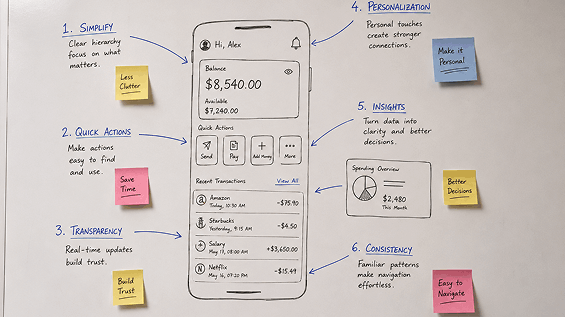
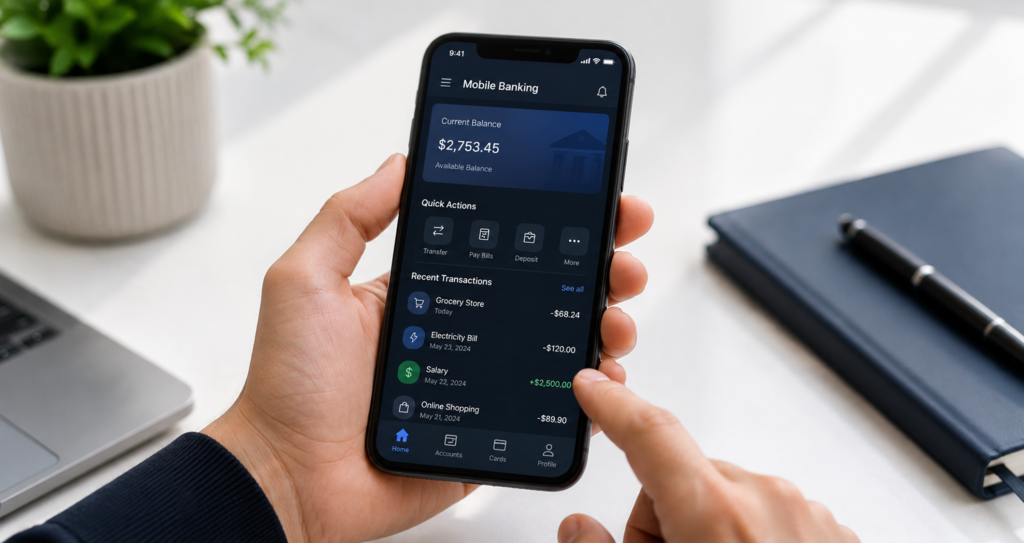
Clean layouts, clear navigation, and user-focused banking app development help users complete banking tasks faster with less friction, and they’re a big part of what shapes overall mobile banking app user experience.
- Fast Account Setup A slow or complicated sign up is one of the biggest reasons people abandon a banking app before they ever use it. The best apps reduce the process to an ID scan, a selfie, and a few details. Fewer steps mean more people actually finish — which is exactly why a solid mobile first banking onboarding solution matters so much in the first few minutes of the customer relationship.
- Security That Does Not Feel Like an Obstacle Security matters, but making users jump through too many hoops pushes them away. The best banking apps use fingerprint or face unlock to keep login fast and safe at the same time.
- A Dashboard That Actually Helps A great app does more than show a balance. Clear transaction history, spending summaries, and quick actions help users understand their money rather than just look at numbers.
- Personalisation That Feels Relevant People expect their banking app to reflect how they actually manage money. Relevant alerts, useful suggestions, and a layout built around their habits make the experience feel less like a product and more like a tool.
- Clean and Simple Design Overloaded screens confuse people and increase drop offs. Clean layouts, clear navigation, and plain language help users find what they need quickly and leave feeling good about the experience.

How UX Directly Powers Mobile First Banking
A mobile first banking strategy is only as strong as the experience behind it. That is where UX does the real work.
Successful mobile first banking strategies rely heavily on modern mobile banking development practices that combine usability, security, and performance into a seamless customer experience.
Good UX in banking is not about making things look nice. It is about removing the moments where a customer hesitates, gets confused, or gives up. It is the difference between someone completing a loan application and someone closing the app halfway through.
Many of the principles behind successful mobile banking experiences align with proven UX best practices that reduce friction and improve user engagement.
Here is how UX drives results specifically in mobile banking:
- It reduces drop offs during onboarding. A well designed sign up flow guides users through each step clearly, cutting the number of people who abandon before finishing.
- It builds trust without slowing things down. Clear visual cues, confirmation messages, and transparent security features reassure users without adding friction to their journey.
- It makes complex tasks feel easy. Things like setting up a direct debit, disputing a transaction, or applying for a product should not require a user manual. Good UX breaks these down into steps anyone can follow.
- It keeps people coming back. Apps that are easy and pleasant to use get opened more often. Higher engagement leads to stronger retention, and stronger retention leads to better business outcomes.
In mobile banking, UX is not a finishing touch. It is the foundation.
What Are the Best Practices for Launching Mobile-First Banking Experiences?
Banks and fintechs asking this question usually land on the same few habits.
- Start with the phone, not the desktop. Build the mobile experience first. Don’t shrink a desktop design down to fit a smaller screen. What works on a laptop rarely translates cleanly to a five-inch screen.
- Keep onboarding short. An ID scan, a selfie, a few details — that’s it. Every extra step is a chance for someone to quit. The fewer taps between download and first login, the more people actually make it through.
- Make security fast, not just strong. Biometric login and background fraud checks protect users without slowing them down. Security that’s invisible until it’s needed builds trust instead of testing patience.
- Design for one hand, on the move. Bigger buttons. Shorter menus. Flows people can pause and pick back up later. Most banking happens in stolen moments, not while someone’s sitting still with full attention.
- Never stop improving after launch. Watch where users drop off. Keep refining based on real behavior, not assumptions. The best mobile-first banks treat go-live as the start of the work, not the end of it.
- Plan for growth early. An app that works for 10,000 users can break at 100,000 if scale wasn’t part of the plan from day one. Retrofitting infrastructure under pressure is far costlier than designing for headroom up front.
- Get these right, and mobile-first banking feels effortless fast, simple, and secure, without customers ever noticing the work behind it.
What the Best Digital Banks Have in Common
The digital banks that have grown fastest share the same underlying approach.
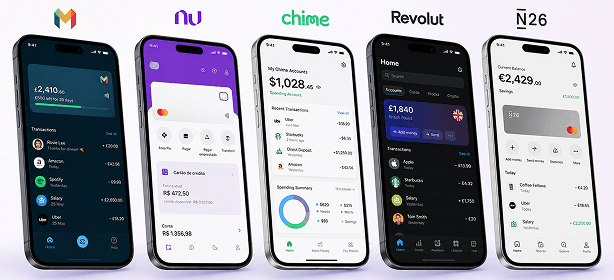
Monzo built its reputation by making everyday banking genuinely easy to understand. Instant spending notifications, clear budgeting tools, and language that does not read like a legal document. The app feels less like a financial institution and more like something a friend built to help you manage money.
Nubank took a similar path in Latin America. Rather than overwhelming new customers with forms, the app guides people through each step one at a time using friendly language and reassuring messages. The experience feels approachable even though it meets strict banking regulations.
Both banks prove the same point. Many fintech startups begin with MVP development to validate customer demand before expanding into a full banking platform.
Where Most Banks Are Still Getting It Wrong
Most banks have the basics covered. You can check your balance and send money. But automatic savings tools, spending round ups, and genuinely useful money management features are still missing from many apps.
Many institutions invest heavily in features but underestimate the importance of continuous mobile banking app development improvements that keep experiences intuitive and competitive.
The gap is not closing fast enough. And customers are patient only up to a point.

Does Every Bank Need to Go Fully Digital?
Not necessarily. The right approach depends on who a bank serves.
Banks also need modern website development strategies to ensure customers have a consistent experience across web and mobile channels. A mobile only model tends to work better for newer digital banks that are not carrying the weight of a branch network.
The honest question is not which model sounds most modern. It is whether the mobile experience being offered is genuinely good enough to keep customers from looking elsewhere.
Customers are not comparing their bank to other banks any more. They are comparing it to every other app on their phone, including Amazon, Deliveroo, and Uber. That is the real competition.

How AI IoTS Help Banks and Fintechs Build Better Mobile Experiences
Getting mobile banking UX right takes more than good intentions. It takes a process, expertise, and an honest understanding of where users are struggling.
We help banks and fintechs through mobile banking app development, mobile banking application development, UX strategy, and custom product development built to improve engagement, retention, and conversions. Delivering successful mobile banking experiences requires strong research, testing, and UX project management throughout the product lifecycle.
If your mobile banking app is not converting, retaining, or engaging users the way it should, that is a UX problem we can solve.

Conclusion
Mobile first banking is not about having an app. It is about building every part of the customer experience around how people actually use their phones.
The banks doing this well are growing. The ones treating mobile as an afterthought are losing customers to competitors investing in better UX and mobile banking experiences with teams like AI-IoT Geeks.The gap between the two is widening. For the banks on the wrong side of it, time is running short.
Explore out services and see how we re design mobile banking UX for real results.
Book a Free Strategy Call at aiiotgeeks.com
Have any questions in mind
Frequently Asked Questions?
1.What are the differences between mobile-first and traditional checking accounts?
Mobile-first accounts are designed around the phone fast onboarding, in-app servicing, and biometric security. Traditional accounts are designed around the branch, with more fees but more in-person access. Mobile-first trades that access for speed and lower cost.
2.How can businesses implement a mobile first banking strategy?
By prioritising mobile UX design, simplifying onboarding, integrating secure authentication, and continuously improving based on how users actually behave.
3.What are the key benefits of adopting mobile first banking?
Higher completion rates, better customer engagement, stronger retention, and a real competitive edge over traditional banks.
4.Is mobile first banking suitable for traditional banks?
Yes. Traditional banks can adopt a mobile first approach by redesigning their apps and prioritising the phone experience without removing branch services.
5.How does mobile first banking increase conversions?
Simplified account setup, faster navigation, and fewer steps reduce drop offs and encourage users to complete the actions that matter.
6.What should banks look for in a mobile banking UX partner?
Expertise in UX design, experience in financial services, strong security knowledge, and a track record of improving user engagement and conversion rates.